
Finding Dark Web Websites on Reddit: A Guide
This guide is for curious users seeking reliable dark web links through Reddit discussions while minimizing potential dangers.
First published: | Last updated: October 9, 2026 | By: Evelyn Hart
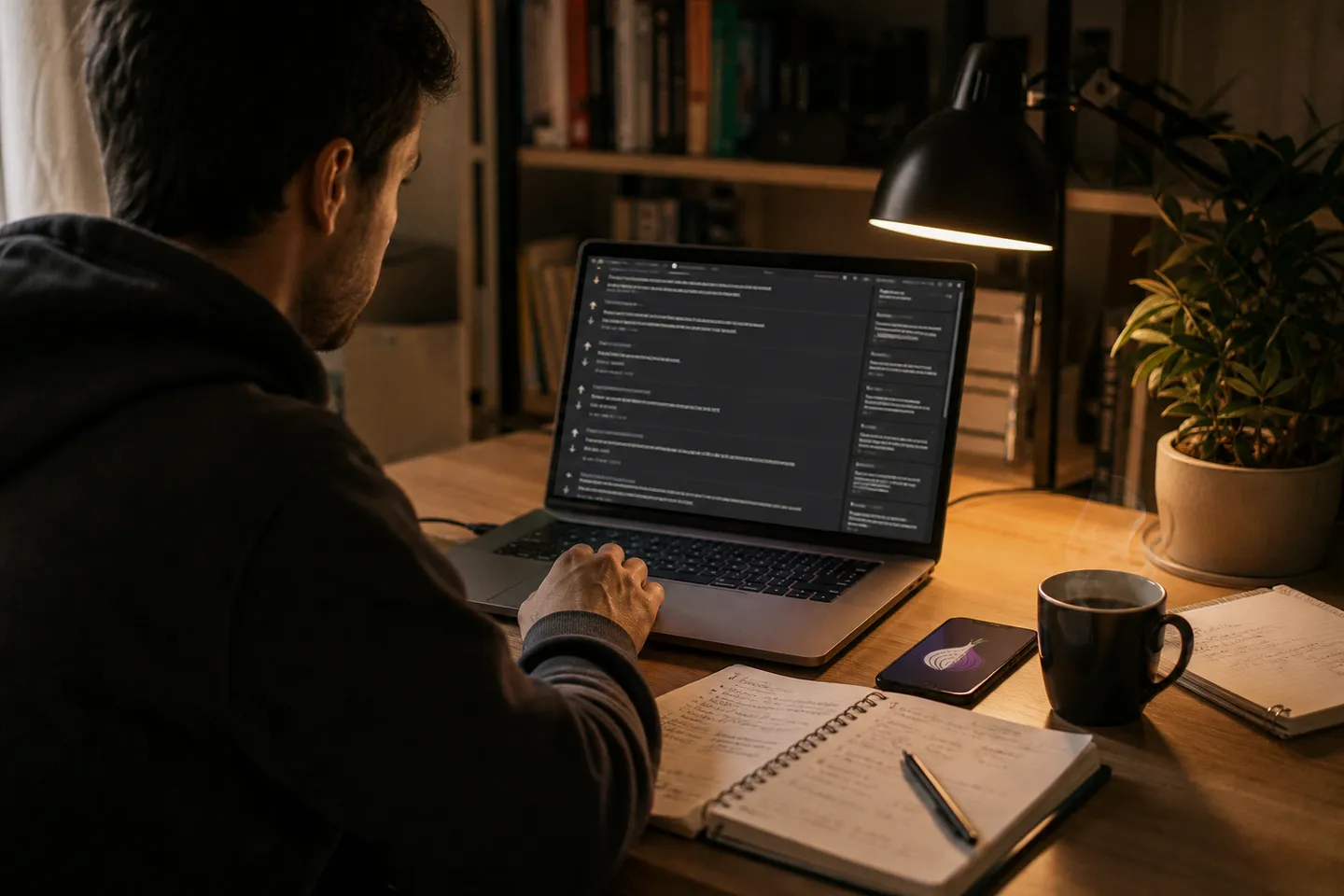
Reddit users share dark web links in subreddits like r/onions and r/deepweb, but most legitimate .onion addresses point to directories, forums, and privacy-focused services rather than marketplaces. The safest approach involves:
- Verifying links through multiple independent sources before accessing
- Using only official Tor Browser without plugins or modifications
- Cross-checking addresses against known phishing variants
What Dark Web Websites Are Discussed on Reddit
The terms "dark web" and "deep web" are often confused. The deep web encompasses all parts of the internet not indexed by traditional search engines, including databases, subscription services, and private networks. The dark web is a small portion of the deep web that requires specific software, like the Tor Browser, to access. It primarily features .onion sites, which are designed to provide anonymity to both users and site operators.
Reddit serves as a significant discovery hub for dark web resources, particularly through subreddits such as r/TOR, r/deepweb, and r/onions. These communities facilitate discussions about legitimate dark web websites and share resources that promote privacy and security online. Users often share links and insights about various sites, making it easier for newcomers to navigate this complex part of the internet.
Common types of websites discussed on these subreddits include privacy tools, forums, and news outlets. For example, ProPublica operates a dark web version of its site to provide investigative journalism while protecting the identities of its sources. DuckDuckGo has a .onion version that allows users to search the web anonymously, prioritizing privacy. SecureDrop is another example, serving as a platform for whistleblowers to share information securely with journalists.
These sites are frequently mentioned due to their focus on privacy and security, making them valuable resources for those interested in the dark web. Users should approach the dark web with caution, verifying links through multiple independent sources before accessing them. This is especially important as many dark web sites can lead to phishing or illegal activities.
Key Reddit Communities for Dark Web Information
Several subreddits focus on sharing information about the dark web, each catering to different user needs. Here is a summary of key communities:
r/TOR
With over 100,000 subscribers, r/TOR is dedicated to discussions about the Tor network and its associated technologies. This subreddit is particularly useful for newcomers seeking to understand how to use the Tor Browser effectively and safely. Users can find guides on operational security and best practices for maintaining anonymity online. It is recommended for beginners but also has content appealing to more experienced users.
r/deepweb
This subreddit has approximately 75,000 subscribers and serves as a broad platform for discussions about the deep web and dark web. Users share links, news, and experiences related to hidden websites, privacy tools, and security measures. While it is accessible for beginners, some discussions may be more technical, making it beneficial for users with a basic understanding of the dark web.
r/onions
With around 50,000 subscribers, r/onions focuses specifically on .onion sites. Here, users share links and recommendations for various hidden services. This subreddit is ideal for those looking for specific resources or sites, but it may require a bit of prior knowledge about navigating the dark web. It is more suitable for users who are somewhat familiar with what to expect.
r/privacy
Although not exclusively about the dark web, r/privacy has over 300,000 subscribers and covers a wide range of topics related to online privacy and security. Discussions often include tools and practices that help protect user data, making it a valuable resource for anyone interested in privacy-focused internet usage. This subreddit appeals to both beginners and experienced users, as it provides a mix of basic information and advanced topics.
Each of these communities offers unique insights and resources, allowing users to engage with the dark web safely and responsibly. Beginners should start with r/TOR and r/deepweb for foundational knowledge, while more experienced users may find r/onions and r/privacy beneficial for deeper exploration.
Evaluating dark web links on Reddit requires caution and a systematic approach. Several red flags can indicate potentially harmful or illegitimate posts. New accounts sharing links without any prior comment history raise concerns; these accounts may be created specifically to promote phishing links or scams. Posts that make overly enticing promises, such as "risk-free" services or "guaranteed" products, should also be treated skeptically.
Verification methods are essential to ensure safety. Checking the post history of the user can provide insights into their credibility. If a user has a consistent history of sharing legitimate information, their links may be more trustworthy. Community vouching is another important factor; if other users comment positively on a link or share their experiences, it can serve as a form of validation. Cross-referencing links with known directories, such as the Hidden Wiki or onion search engines, can also help confirm their legitimacy.
The patterns of upvotes and downvotes can serve as trust signals. A high number of upvotes coupled with positive comments typically indicates a reliable source. Conversely, a link with numerous downvotes may be a sign of trouble. It is advisable to investigate further before engaging with any suspicious content.
Directly clicking links from Reddit posts is highly discouraged. Instead, users should copy and paste the URLs into the Tor Browser. This minimizes the risk of inadvertently exposing personal information through phishing attempts or malicious redirects. Following these guidelines can help users navigate the dark web more safely and effectively.
Safe Dark Web Sites Recommended by Reddit Users
Several onion sites are frequently recommended by Reddit users for their focus on privacy, security, and legitimate services. Below is a curated list categorized by purpose, along with their .onion addresses and the subreddits that endorse them.
Search Engines
DuckDuckGo Onion: This privacy-focused search engine allows users to search the web anonymously. Access it at
http://duckduckgo.com.onion. Recommended on r/TOR and r/onions.Ahmia: Ahmia is a search engine that indexes .onion sites, helping users find hidden services. Visit it at
http://ahmia.fi. Users often suggest this site in r/deepweb and r/onions.
News
ProPublica: An investigative journalism site that operates a dark web version to protect sources. Its .onion address is
http://propub3r6espa33w.onion. Frequently mentioned on r/TOR and r/deepweb.The New York Times: The newspaper provides a .onion version of its site to ensure access in regions with censorship. The address is
http://www.nytimes3xbfgragh.onion, often shared in r/deepweb.
Communication
- SecureDrop: This platform allows whistleblowers to share information securely with journalists. Access it through various news organizations' .onion sites, commonly discussed in r/deepweb.
Resources
The Hidden Wiki: A popular directory of .onion sites. While it includes various links, users should verify each entry independently. Its address is
http://wikitjerrta4qgz4.onion, often recommended in r/onions.Sci-Hub: This site provides access to academic papers and research articles, useful for students and researchers. The .onion address is
http://scihub22266oqcxt.onion. It is mentioned in r/deepweb.Tor Metrics: A resource for understanding Tor network statistics and user metrics. The site can be accessed at
http://metrics.torproject.org, discussed in r/TOR.Library Genesis: A resource for accessing books and articles for free. The .onion link is
http://librarygenesis.onion, frequently shared on r/deepweb.ZeroBin: A minimalist, encrypted pastebin where users can share text securely. Its .onion address is
http://zerobinqn3m4b2.onion, often recommended in r/TOR and r/privacy.
These sites serve various purposes and have been vouched for by users on Reddit. However, verifying the legitimacy of each link through multiple sources is essential to avoid potential risks associated with the dark web.
Common Scams and Dangers in Reddit Dark Web Discussions
Engaging in dark web discussions on Reddit can expose users to various scams and dangers. Awareness of these risks is crucial for safe navigation.
Phishing links often masquerade as legitimate resources. Users may encounter posts claiming to provide access to exclusive services or hidden marketplaces, only to find themselves directed to sites designed to harvest personal information. For example, in 2020, a Reddit user shared a link to what was purported to be a secure marketplace, which turned out to be a phishing site that compromised several users' accounts.
Fake marketplaces and honeypots are another significant threat. These sites mimic real dark web marketplaces but aim to trap users. Once a user interacts with the site, their information may be logged or compromised. The FBI has reported that many drug transactions on the dark web lead to scams, as buyers often receive counterfeit products instead of what they ordered, highlighting the inherent risks of purchasing from unknown sources[1].
Malware distribution tactics frequently appear in dark web discussions. Users may unwittingly download malicious software disguised as applications or files shared in threads. The Tor Project warns against downloading documents via Tor, particularly formats like DOC and PDF, as they can contain links that expose users' IP addresses[2].
Social engineering tactics in direct messages (DMs) can also pose risks. Scammers may reach out to users posing as experienced dark web users, offering assistance or exclusive access to resources. Trusting these unsolicited messages can lead to compromised security and loss of anonymity.
To mitigate these risks, users should always verify links through multiple independent sources before accessing them. Avoiding direct interaction with suspicious accounts and being cautious in private messages can further enhance safety. Using only the official Tor Browser without plugins or modifications is essential for maintaining anonymity and security[2].
Setting Up Safely Before Following Reddit Recommendations
Using the Tor Browser is essential for accessing dark web resources safely. It provides the necessary anonymity and security features needed to navigate .onion domains effectively.
Debates on Reddit regarding VPN usage with Tor suggest that while some users advocate for added security, the Tor Project generally advises against it unless users are advanced and know how to configure both tools without compromising privacy[3]. The main concern is that improper setup can expose users' IP addresses, defeating the purpose of using Tor.
Security settings recommended by Reddit users often include disabling JavaScript and avoiding any browser plugins. The Tor Project explicitly warns that plugins can reveal a user's IP address, undermining anonymity[2]. Users should also avoid downloading files directly through Tor, especially DOC and PDF formats, as these can contain resources that may leak personal information[2].
Operational security is crucial when engaging with the dark web. Users should never use personal information or identifiable details while browsing. It is advisable to use a separate device dedicated to accessing the dark web to minimize risks. This approach helps isolate potential threats from the user's primary device and personal data.
By following these recommendations, users can mitigate risks and enhance their safety while exploring dark web resources discussed on platforms like Reddit.
What Reddit Gets Wrong About the Dark Web
Common misconceptions about the dark web often circulate in discussions on Reddit. One prevalent myth is that everything on the dark web is illegal. While it is true that illegal activities occur, many legitimate resources exist, such as news sites and forums focused on privacy. For instance, the ProPublica dark web version allows for anonymous journalism, showcasing that not all .onion domains are illicit.
Another frequently shared belief is that the FBI monitors all dark web activities. While law enforcement agencies, including the FBI, have dedicated teams to combat illegal activities on the dark web, such as the Joint Criminal Opioid and Darknet Enforcement Team (JCODE), not every user is under surveillance. It is essential to understand that the risk of being targeted is higher for those engaging in illegal transactions rather than casual users seeking privacy[1].
The notion that navigating the dark web requires special skills is also exaggerated. Basic knowledge of using the Tor Browser and recognizing trustworthy sources suffices for most users. Many resources, including communities on Reddit, provide guidance on safely accessing and evaluating .onion sites.
Exaggerated claims about the dangers of the dark web can lead to unnecessary fear. While risks exist, such as encountering phishing links or malware, practicing good operational security significantly mitigates these threats. For example, avoiding direct downloads through the Tor Browser and using the browser as intended without plugins can reduce risks of exposure[2].
A realistic risk assessment reveals that while certain dangers are present, they can often be avoided with proper precautions. Engaging with reputable sources and following best practices, such as those shared in subreddits like r/TOR and r/deepweb, can provide a safer experience for users interested in exploring the dark web.
Reddit Alternatives for Finding Dark Web Resources
Exploring dark web resources can extend beyond Reddit, offering users additional platforms and forums that may provide more reliable information. Several dark web forums and directories discussed on Reddit can serve as alternatives for those seeking to navigate this space safely.
Tor-based discussion boards, such as The Hub and Dread, provide community-driven platforms for users to share experiences, resources, and recommendations. These forums often have stricter moderation policies compared to Reddit, which can result in higher-quality discussions and less misinformation. Users can engage in real-time discussions, ask questions, and receive immediate feedback from community members.
Curated link lists, such as those found on Hidden Wiki alternatives, also offer structured access to .onion domains. While the original Hidden Wiki has faced issues with outdated or malicious links, various alternatives have emerged, providing updated resources with user-generated content. These lists often categorize sites by purpose, helping users find what they need more efficiently.
Information quality on these alternative platforms can vary significantly compared to Reddit. While Reddit allows for rapid sharing of links, it may also lead to the dissemination of unverified or harmful resources. In contrast, dedicated dark web forums often emphasize user verification and community feedback, creating a more trustworthy environment. For example, a 2024 report indicated that dark web marketplaces contained over 13 million listings, highlighting the vast amount of information available but also the potential for scams and misinformation[4].
Some users prefer non-Reddit sources due to concerns over privacy and the potential for surveillance. While Reddit discussions can be valuable, the platform is not entirely anonymous, and users may worry about their activity being tracked. Dark web forums and directories can offer a greater degree of anonymity, allowing users to share information without the same level of exposure.
To summarize, exploring dark web resources through alternatives to Reddit can enhance safety and accuracy. Engaging with dedicated forums and curated link lists provides a more structured approach to finding reliable .onion sites while minimizing risks associated with misinformation and privacy breaches.
Reddit Credibility Matrix for Dark Web Links
- Criteria
- Account Age
- Scoring (1-5)
- 1-5
- Notes
- Older accounts generally more credible.
- Criteria
- Karma
- Scoring (1-5)
- 1-5
- Notes
- Higher karma indicates community trust.
- Criteria
- Subreddit
- Scoring (1-5)
- 1-5
- Notes
- Reputable subreddits like r/TOR score higher.
- Criteria
- Comment Engagement
- Scoring (1-5)
- 1-5
- Notes
- More comments suggest active discussions.
- Criteria
- Cross-References
- Scoring (1-5)
- 1-5
- Notes
- Links verified by multiple sources score higher.
Common Mistakes and Misconceptions
Trusting New Accounts with Fresh .onion Links
Reddit users frequently accept dark web links from accounts created within days or weeks of posting. This pattern appears because newcomers assume active posting equals legitimacy. The risk materializes when these fresh accounts share phishing domains or honeypot marketplaces designed to capture credentials. Account age under six months combined with karma below 100 should trigger verification through independent sources before accessing any .onion address. Cross-reference the link in established communities like r/TOR where veteran users can identify known scam patterns.
Assuming All Reddit-Shared Links Are Currently Active
Many users click .onion addresses from posts dated months or years earlier without checking whether the service still operates. Dark web sites frequently shut down or migrate to new addresses, making old Reddit threads unreliable directories. A 2024 monitoring report found dark web marketplace listings decreased by 6.43% year-over-year, indicating significant turnover in active sites[4]. Before attempting to access any .onion domain shared on Reddit, verify the link's current status through recent discussions or check if multiple users within the past 30 days confirm it remains functional.
Believing VPN Plus Tor Guarantees Complete Safety
Discussions across r/privacy and r/TOR often promote VPN-Tor combinations as foolproof anonymity solutions. Users adopt this setup thinking layered tools eliminate all risks. The Tor Project explicitly states it does not recommend using VPNs with Tor unless the user possesses advanced configuration knowledge, as improper setup can compromise privacy rather than enhance it[3]. The correct approach involves using Tor Browser alone with default security settings, avoiding plugins that might leak IP addresses[2], and understanding that operational security practices matter more than stacking anonymity tools.
Installing Browser Extensions to "Enhance" Tor Security
Some Reddit threads suggest adding VPN extensions, ad blockers, or security plugins to Tor Browser for improved protection. This advice contradicts official guidance because plugins can be manipulated to reveal IP addresses and make users easier to identify[2]. The Tor Project warns that additional addons may bypass Tor protections or harm anonymity[2]. Tor Browser ships with necessary security features already configured. Any modification beyond default settings increases fingerprinting risk and undermines the anonymity provided by making all Tor users appear similar.
Key Takeaways
- Verify account age and karma before trusting .onion links shared on Reddit; accounts under six months with low karma require independent confirmation through established communities.
- Cross-reference every .onion address with recent discussions to confirm the site remains active, as dark web services frequently shut down or migrate.
- Use Tor Browser alone without VPNs or plugins unless you possess advanced configuration knowledge; additional tools often compromise anonymity rather than enhance it.
- Prioritize subreddits with active moderation like r/TOR and r/onions over general forums where unverified links circulate freely.
- Never download files directly through Tor or use personal information while browsing .onion domains to maintain operational security.
For structured access to verified resources beyond Reddit discussions, review curated directories and verification methods in List of Onion Sites: What You Need to Know.
Things readers ask
What are some projects or websites that you've seen on the dark web?
Legitimate dark web projects include ProPublica's .onion version for anonymous journalism, SecureDrop platforms for whistleblowers, and privacy-focused forums like Dread. Dark web marketplaces contained 13,076,513 total listings in 2024, including both illegal goods and legitimate services[4]. Reddit threads in r/TOR and r/onions frequently discuss these resources, though verification remains essential before accessing any shared link.
Is the dark web really as dangerous as people say?
The danger level depends on user behavior rather than the dark web itself. The FBI's Internet Crime Complaint Center received 859,532 complaints with $16.6 billion in losses during 2024, though these figures cover all internet crime, not exclusively dark web activity[5]. Risks increase significantly when users engage in illegal transactions, download unverified files, or ignore operational security practices. Casual browsing with proper precautions—using Tor Browser without modifications and avoiding personal information—presents manageable risk.
How do I know if I am on the dark web?
You are on the dark web when accessing .onion domains through Tor Browser, which displays a distinct purple onion icon in the address bar. Regular websites accessed through Tor do not constitute dark web browsing. The Tor Browser address bar shows ".onion" at the end of URLs instead of standard domain extensions like .com or .org, and these addresses typically consist of random alphanumeric characters rather than readable names.
What websites are on the dark web?
Dark web sites span journalism platforms like ProPublica, whistleblowing systems such as SecureDrop, privacy forums, and marketplaces. In 2024, dark web marketplaces contained 2,162,415 credit card listings, 248,572 social security listings, and 415,495 email account listings among other categories[4]. The Information industry was the most targeted sector at 11.42% of dark web forum posts, followed by Public Administration at 11.17%[6]. Not all .onion sites involve illegal activity—many serve legitimate privacy needs.
How dangerous is it to click on random onion links?
Clicking random .onion links presents significant risk because these addresses can lead to phishing sites, malware distribution points, or law enforcement honeypots. The FBI established JCODE in 2018 specifically to target darknet operations, and many fraudulent marketplaces exist to capture user credentials[1]. Dark web marketplace listings decreased by 6.43% from 2023 to 2024, indicating frequent site closures and migrations that make old links particularly unreliable[4]. Verify every link through recent community discussions and multiple independent sources before accessing.
What is the best dark web search engine?
No single "best" dark web search engine exists because .onion indexing remains incomplete and search results often contain outdated or malicious links. Reddit discussions in r/TOR frequently mention Ahmia and Torch as more established options, though users should verify any results through community feedback before accessing sites. Manual verification through curated directories and recent forum discussions provides more reliable access than relying on search engines alone, as dark web sites frequently change addresses or shut down without notice.
Are onion sites dangerous?
Onion sites themselves are not inherently dangerous—the risk depends on the specific site and user behavior. Legitimate .onion domains serve journalism, privacy advocacy, and secure communication purposes. However, many .onion addresses host illegal marketplaces, phishing schemes, or malware. The Tor Project warns that downloading documents through Tor, especially DOC and PDF files, can reveal your IP address when opened[2]. Danger increases when users ignore operational security, trust unverified links, or engage with sites promoting illegal activity.
Explore More Dark Web Insights
Discover additional resources and guides on navigating the dark web safely.
View More Articles