
Exploring Dark Web Sales: What to Expect
This guide is for those curious about dark web sales, offering insights into products, market operations, and associated risks.
First published: | Last updated: October 9, 2026 | By: Evelyn Hart
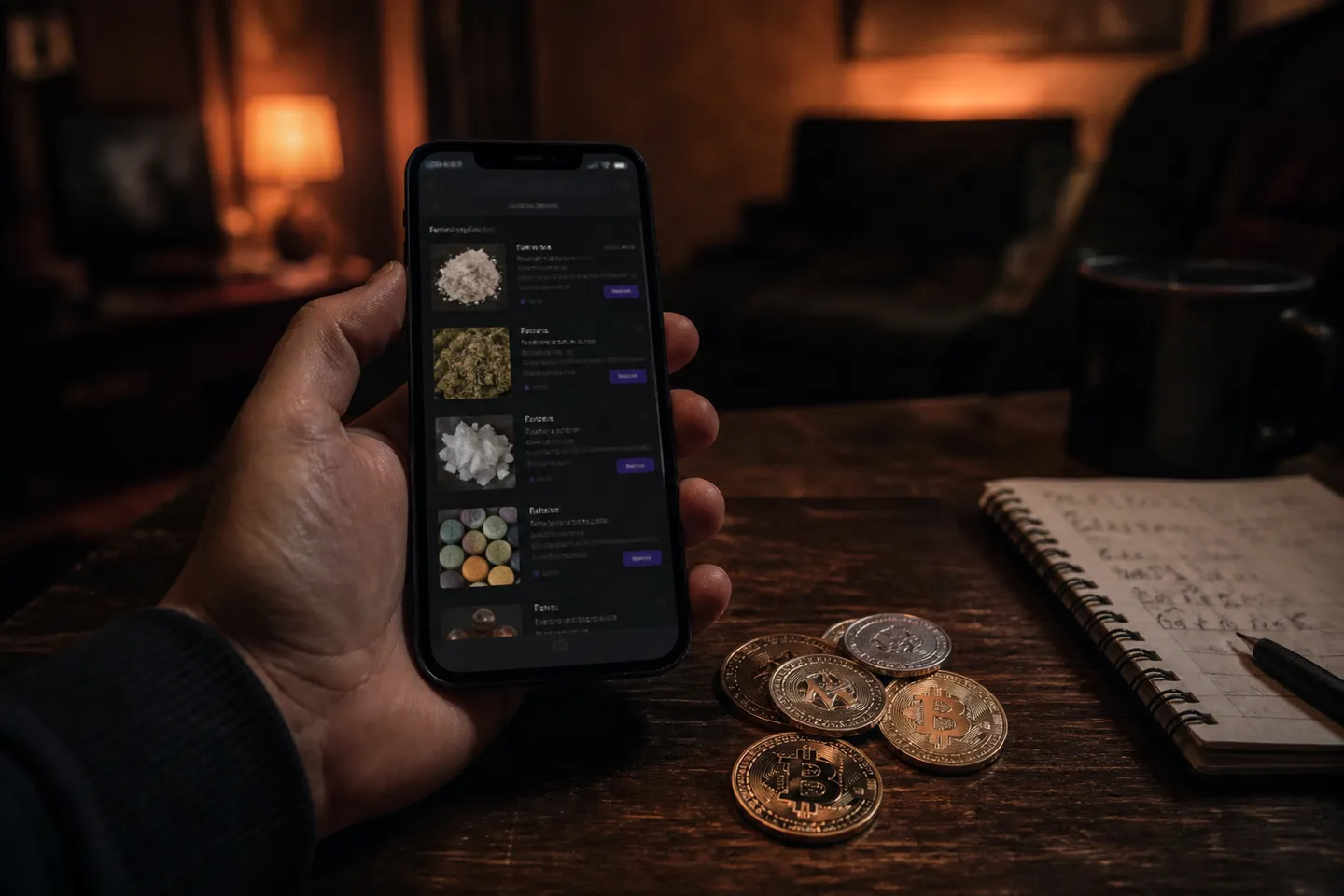
Most readers benefit from understanding what is actually sold and how markets operate before considering risks or technical access methods. Dark web marketplaces primarily trade drugs—cannabis accounts for 26.5% of listings, followed by MDMA and benzodiazepines[1]—alongside stolen payment card data priced from $0.94 to $22.80 depending on origin[2]. Markets received $2 billion in Bitcoin during 2024 despite ongoing law enforcement disruption[3]. Readers planning research or threat intelligence work should prioritize sections on identifying scams and major takedowns, since operations like the Archetyp seizure (EUR 250 million in trades, 3,200 vendors arrested)[4] demonstrate how quickly platforms collapse and expose participant data.
What Determines Marketplace Reliability
- Escrow Implementation
- Marketplaces with mandatory escrow hold funds until delivery confirmation, reducing vendor fraud risk. Check whether escrow is optional or enforced—platforms allowing direct finalization expose buyers to exit scams.
- Vendor Verification Requirements
- Platforms requiring vendor bonds (typically $100–$500) and transaction history filters reduce scam listings. Look for minimum feedback thresholds and whether new vendors can post high-value items immediately.
- Dispute Resolution Process
- Functional arbitration systems with documented resolution times (typically 3–7 days) indicate active moderation. Abandoned disputes or unresponsive admin teams signal operational neglect or planned exit.
- Operational Uptime History
- Marketplaces with consistent uptime over 6+ months demonstrate infrastructure stability. Frequent downtime or sudden domain changes often precede shutdowns—check community forums for outage patterns.
- Security Feature Transparency
- Platforms disclosing PGP requirements, 2FA implementation, and wallet architecture allow independent security assessment. Vague descriptions of "military-grade encryption" without technical details suggest poor operational security.
- Community Reputation Signals
- Cross-reference marketplace claims against independent forums like Dread or dark.fail. Consistent negative reports about selective scamming or withheld withdrawals outweigh promotional vendor reviews.
Comparative Analysis of Dark Web Sales and Marketplaces
- Criteria
- What Are Dark Web Sales and Marketplaces?
- Definition
- Sales conducted on hidden networks using encryption.
- Typical Items Sold
- Drugs, stolen data, counterfeit documents.
- Market Activity
- Active with fluctuating revenues; $2 billion in 2024.
- Risks
- Legal repercussions, scams, loss of funds.
- Legitimacy Indicators
- Check user reviews and vendor ratings.
- Criteria
- What Is Actually Sold on Dark Web Markets
- Definition
- Variety of illegal goods and services.
- Typical Items Sold
- Drugs (cannabis, opioids), credentials, hacking services.
- Market Activity
- 30,786 drug listings in Feb 2024; 26,222 in Jan 2025.
- Risks
- Potential for arrest, financial loss.
- Legitimacy Indicators
- Look for established vendors with high transaction volumes.
- Criteria
- Active Dark Web Markets in 2026
- Definition
- Current functioning platforms for sales.
- Typical Items Sold
- Stolen payment cards, drugs, counterfeit goods.
- Market Activity
- Market dynamics change; Kraken DNM led with $737 million in 2024.
- Risks
- Increased law enforcement scrutiny.
- Legitimacy Indicators
- Monitor for consistent uptime and user activity.
- Criteria
- Major Dark Web Marketplace Takedowns
- Definition
- Law enforcement actions against platforms.
- Typical Items Sold
- N/A
- Market Activity
- Archetyp taken down in June 2024; 270 arrests made.
- Risks
- Loss of access to goods, legal consequences.
- Legitimacy Indicators
- Investigate the history of the marketplace and past incidents.
- Criteria
- How Dark Web Markets Operate
- Definition
- Mechanisms of buying and selling on the dark web.
- Typical Items Sold
- N/A
- Market Activity
- Use of cryptocurrencies for transactions; escrow systems.
- Risks
- Risk of scams and fraud.
- Legitimacy Indicators
- Assess the marketplace's reputation and user feedback.
- Criteria
- Risks for Dark Web Market Participants
- Definition
- Potential dangers of engaging in dark web transactions.
- Typical Items Sold
- N/A
- Market Activity
- Arrests, scams, financial loss.
- Risks
- Legal action, identity theft.
- Legitimacy Indicators
- Research the legal implications of purchases.
- Criteria
- How to Identify Legitimate vs Scam Dark Web Markets
- Definition
- Criteria for distinguishing between real and fake markets.
- Typical Items Sold
- N/A
- Market Activity
- N/A
- Risks
- Increased risk of scams in new markets.
- Legitimacy Indicators
- Check for vendor verification and community feedback.
- Criteria
- Dark Web Sales vs Traditional Cybercrime Channels
- Definition
- Comparison of dark web sales to other cybercrime methods.
- Typical Items Sold
- N/A
- Market Activity
- N/A
- Risks
- Different risk profiles; dark web often less traceable.
- Legitimacy Indicators
- Evaluate the security measures of the platform.
What Are Dark Web Sales and Marketplaces?
Dark web sales refer to transactions conducted on hidden networks, primarily using the Tor browser, which anonymizes user identities and activities. This contrasts with surface and deep web commerce, where transactions occur on publicly accessible sites or within indexed databases. The dark web constitutes a small portion of the internet, estimated at around 0.005% to 1% of total content, with the deep web making up approximately 90%[5][6].
Tor-based marketplaces have a distinct structure. They typically include features like escrow services, which hold funds until the buyer confirms receipt of goods, thus minimizing vendor fraud risks. Many marketplaces also implement vendor ratings, allowing users to assess reliability based on previous transactions. Cryptocurrency payments, particularly Bitcoin, are the standard due to their relative anonymity[7].
Examples of marketplace types include drug markets, which are prominent on the dark web, showcasing listings for various substances like cannabis and MDMA. For instance, in early 2024, the number of drug listings on cryptomarkets was around 30,786, with cannabis making up 26.5% of these listings[1]. Data markets are another category, specializing in stolen personal information and payment card data, with prices for U.S. payment cards averaging $11.51[2]. Finally, service markets offer illicit services such as hacking or fraud, which are increasingly popular as the dark web evolves.
Understanding these marketplaces is crucial for anyone interested in the dynamics of dark web commerce, as they reflect a unique blend of anonymity, risk, and illicit activity.
What Is Actually Sold on Dark Web Markets
Dark web markets offer a range of goods and services, primarily categorized into stolen data, drugs, counterfeit documents, hacking services, and malware. In 2024, dark web markets received just over $2 billion in Bitcoin, indicating significant ongoing activity despite law enforcement disruptions[3]. Stolen data and credentials represent the largest segment, accounting for approximately 64% of market transactions.
Drugs are a prominent item sold on these platforms. For instance, cannabis comprised 26.5% of drug listings, followed by MDMA at 8.4% and opioids at 7.6%[1]. Reports indicate that the number of drug listings remained stable, with around 30,786 listings in February 2024 and 26,222 in January 2025[1]. Prices for drugs can vary widely, with some listings for cannabis and other substances priced competitively.
Stolen payment card data is another significant commodity. Prices for U.S. cards average around $11.51, while Canadian cards sell for about $5.88, and Japanese cards are the most expensive at $22.80[2]. In some cases, the cost of stolen card data has doubled in the past two years, highlighting a trend of increasing prices[2].
Hacking services and malware also have a presence on the dark web, with DDoS services ranging from $50 to $300[8]. The diversity of offerings reflects the evolving landscape of dark web commerce, catering to both digital and physical goods. Understanding these categories is essential for grasping the operational dynamics of dark web markets and the risks involved in participating in such transactions.
Active Dark Web Markets in 2026
Several dark web marketplaces remain operational or have recently become active as of 2026, each with unique specialties.
Kraken DNM, a prominent Russia-based marketplace, has emerged as a leader in the dark web market, generating $737 million in annual revenue in 2024. Its focus is primarily on drug sales, particularly cannabis, which has a substantial presence in its listings[3]. The market's lifespan remains uncertain, as ongoing law enforcement actions pose risks of takedowns and exit scams.
Another notable player is the AlphaBay Market, which specializes in a wide range of illicit goods, including drugs, counterfeit items, and hacking services. While it has regained some traction since its original closure, the volatility of its operations raises concerns about its longevity and the potential for sudden shutdowns.
The Silk Road 3.0 has also resurfaced, attempting to capitalize on its predecessor's legacy. It primarily offers drugs and digital services, yet its reputation is marred by concerns regarding vendor reliability and the risk of scams, making it unsuitable for inexperienced users.
The Dream Market continues to operate, focusing on drugs and stolen data. However, it has experienced several periods of downtime, indicating instability that potential users should consider before engaging in transactions.
Marketplaces like these exemplify the volatile nature of dark web commerce. The risk of exit scams and law enforcement interventions is high, as evidenced by previous takedowns, such as the Archetyp marketplace, which was dismantled in mid-2024, resulting in significant vendor arrests and financial losses[4]. Consequently, users should approach these platforms with caution and remain informed about their operational status and community feedback.
Major Dark Web Marketplace Takedowns
Significant law enforcement actions against dark web marketplaces reveal a pattern of rise, peak, and subsequent takedown or exit scams. The Silk Road, launched in 2011, became notorious for facilitating drug sales and was seized by the FBI in 2013. Its closure marked a pivotal moment in dark web law enforcement, showcasing the potential for government intervention.
The takedown of AlphaBay and Hansa in 2017 demonstrated a coordinated approach, known as Operation Bayonet. This operation involved simultaneous raids and server seizures, leading to the arrest of numerous vendors and users. AlphaBay alone had around 400,000 users and facilitated transactions worth millions, emphasizing the scale of dark web commerce at that time.
More recently, the Archetyp marketplace was dismantled in June 2024, resulting in the arrest of its 30-year-old German administrator in Spain. Archetyp boasted around 3,200 vendors and facilitated drug trades worth at least EUR 250 million. The operation involved about 300 officers across five countries and resulted in asset seizures totaling EUR 7.8 million[4].
The Hydra marketplace, operational until 2022, was another high-profile case. It was known for its extensive drug listings and was ultimately taken down due to international law enforcement efforts. The pattern observed in these cases indicates that marketplaces often experience a lifecycle of initial growth, peak activity, and eventual closure, typically driven by law enforcement crackdown or internal exit scams.
These takedowns illustrate the persistent challenges in the dark web marketplace ecosystem, where participants face significant risks of arrest and financial loss. Understanding the history and tactics of law enforcement can help individuals recognize the vulnerabilities and operational dynamics of dark web sales.
How Dark Web Markets Operate
Dark web markets facilitate transactions through a structured process that includes vendor and buyer interactions, payment methods, and security measures. Initially, buyers browse listings and select products from various vendors. Once a purchase is made, an escrow system typically holds the payment until the buyer confirms receipt of the goods. This mechanism helps mitigate the risk of vendor fraud, though it is not foolproof.
Dispute resolution processes are often in place; if issues arise, buyers can report problems to the marketplace administrators, who may intervene to resolve disputes. The effectiveness of these systems can vary significantly between platforms, often influenced by the marketplace's reputation and user feedback.
Cryptocurrencies, particularly Bitcoin and Monero, are the primary payment methods. Bitcoin is widely accepted due to its popularity and established infrastructure, while Monero is favored for its enhanced privacy features. As of 2024, darknet markets received over $2 billion in Bitcoin transactions, indicating robust ongoing activity[3].
Reputation systems play a crucial role in establishing trust between buyers and vendors. User reviews and ratings help potential buyers gauge the reliability of vendors based on their past performance. Additionally, some markets implement multisig transactions, which require multiple signatures for a transaction to be completed, providing an extra layer of security. PGP encryption is commonly utilized for secure communication between buyers and vendors, ensuring that sensitive information remains confidential.
These operational mechanisms highlight both the strengths and limitations of dark web markets. While they offer anonymity and a wide range of goods, the potential for scams and legal repercussions remains a significant concern for participants. Understanding these dynamics is essential for anyone interested in the dark web marketplace.
Risks for Dark Web Market Participants
Participating in dark web markets presents various risks, including scams, technical vulnerabilities, and financial uncertainties. Scam risks are especially prevalent, with exit scams and vendor fraud being common concerns. Exit scams occur when vendors disappear after receiving payment, leaving buyers without their purchased items. According to reports, fraud shops on the dark web received $225 million in 2024, indicating a significant level of fraudulent activity[3]. Phishing sites also pose a threat, tricking users into revealing personal information or credentials.
Technical risks include exposure to malware and potential deanonymization. Users may inadvertently download malicious software that compromises their devices or personal data. Deanonymization risks arise when users' identities can be traced back through various techniques, undermining the anonymity that dark web participants seek.
Financial risks are inherent due to the volatility of cryptocurrencies used for transactions. Prices can fluctuate dramatically, leading to situations where the value of funds can change rapidly, resulting in potential losses. As of early 2024, Bitcoin transactions in dark web markets exceeded $2 billion, highlighting the substantial financial activity but also the associated risks[3].
Law enforcement agencies actively monitor dark web activities, with operations like Operation RapTor resulting in the arrest of 270 individuals involved in darknet activities[8]. Honeypot operations, where law enforcement creates fake marketplaces to catch criminals, further increase the risks for participants.
Statistics indicate that scams are widespread, with many users reporting issues with vendors or lost funds. Understanding these risks is crucial for anyone considering engagement in dark web markets, as they reflect a complex interplay of opportunities and hazards.
How to Identify Legitimate vs Scam Dark Web Markets
Identifying legitimate dark web markets requires careful evaluation of several indicators. A strong community reputation on forums is a key sign of reliability. Established markets usually have ongoing discussions and reviews from users, helping gauge vendor trustworthiness and product quality. Longevity also matters; markets that have been operational for several years tend to have more robust reputations compared to newer, less established ones.
The implementation of escrow services is another critical factor. Escrow acts as a safeguard, holding payments until the buyer confirms receipt of goods, thus reducing the risk of vendor fraud. Markets that lack this feature should be approached with caution, as they may be more susceptible to scams. Additionally, effective vendor verification processes, where vendors undergo checks before being allowed to sell, enhance market security.
Red flags include unrealistic prices, particularly those that seem too good to be true. Such pricing can indicate low-quality products or scams. Poor operational security (OPSEC) practices, such as vendors failing to use encrypted communication or showing carelessness with personal data, also signal potential risks. New markets with aggressive marketing tactics may be particularly suspect, as they could be designed to exploit unsuspecting buyers before disappearing.
Trusted community resources for market verification include dark web discussion forums and specialized intelligence platforms. These resources can provide insights into market activity, user experiences, and recent developments, helping users make informed decisions before engaging in transactions.
Dark Web Sales vs Traditional Cybercrime Channels
Dark web marketplaces differ significantly from traditional cybercrime channels such as Telegram groups, private forums, and direct vendor contacts. Marketplaces provide a centralized platform that aggregates various vendors and products, enhancing user experience through features like escrow services and user reviews. In 2024, darknet markets received over $2 billion in Bitcoin, demonstrating their substantial role in the illicit economy[3].
The emergence of marketplaces can be attributed to their advantages, including a structured environment that fosters trust. Escrow services hold payments until the buyer confirms receipt of goods, mitigating the risk of vendor fraud. Additionally, user reviews help buyers make informed decisions, which is less reliable in decentralized channels like Telegram. While private forums and direct contacts may offer lower prices, they come with higher risks of scams and lack of accountability.
As law enforcement intensifies crackdowns on prominent platforms, trends indicate a shift toward alternative communication methods. By 2025, Telegram alternatives may gain popularity due to increased scrutiny of existing platforms. This shift could lead to diversification in sales methods, as vendors seek to adapt to a changing landscape.
Sales strategies are evolving, with vendors exploring new channels and methods to reach buyers. The rise of decentralized finance and peer-to-peer networks may further complicate the dark web marketplace, making it essential for users to remain vigilant about the risks associated with each method. Understanding these dynamics is crucial for navigating the complexities of dark web sales.
Which Approach Fits Your Situation
If You Seek to Understand Market Mechanisms Without Participation
Monitoring established community forums and intelligence platforms provides insight into operational dynamics without direct exposure to legal or financial risks. These resources aggregate user experiences, market takedowns, and emerging trends, allowing observers to track how escrow systems, reputation mechanisms, and law enforcement tactics evolve. This approach suits researchers, journalists, or security professionals who need contextual knowledge without engaging in transactions.
If You Are Assessing Cybercrime Threat Landscapes for Professional Purposes
Focus on documented law enforcement operations and statistical data rather than marketplace exploration. Operations like RapTor, which resulted in 270 arrests, and the Archetyp takedown involving 300 officers across five countries demonstrate enforcement capabilities and international cooperation patterns[8][4]. Analyzing transaction volumes—such as the $2 billion in Bitcoin received by darknet markets in 2024—offers quantifiable measures of illicit activity scale without requiring direct market access[3].
If You Are Evaluating Cryptocurrency Use in Illicit Contexts
Examine the functional differences between Bitcoin and Monero adoption across platforms. Bitcoin dominates due to established infrastructure, accounting for the majority of the $2 billion in darknet market transactions recorded in 2024, while Monero attracts users prioritizing enhanced privacy features[3]. Understanding these payment method distinctions clarifies how anonymity tools function in practice and why certain cryptocurrencies gain preference in specific threat scenarios.
If You Need to Recognize Scam Indicators for Security Awareness
Study documented fraud patterns rather than testing markets directly. Fraud shops alone received $225 million in 2024, indicating widespread scam activity[3]. Common red flags include unrealistic pricing, absence of escrow mechanisms, and aggressive marketing by new platforms. Recognizing these indicators through case studies and community reports provides practical knowledge for identifying suspicious operations without personal risk exposure.
If You Are Tracking the Shift Toward Alternative Communication Channels
Monitor the migration from centralized marketplaces to decentralized methods like Telegram groups and private forums. This trend accelerates as law enforcement targets prominent platforms, potentially leading to increased adoption of Telegram alternatives by 2025. Understanding this evolution helps anticipate how illicit commerce adapts to enforcement pressure, though direct participation in these channels carries heightened scam risks due to reduced accountability structures compared to marketplace escrow systems.
Bottom Line: What Approach to Choose
Understanding dark web sales mechanisms does not require participation. Monitoring established forums and intelligence platforms provides operational insight without legal or financial exposure—this suits researchers and security professionals tracking threat landscapes. For assessing cybercrime trends, focus on documented enforcement operations like RapTor's 270 arrests and statistical data showing $2 billion in Bitcoin flowing to darknet markets in 2024[3][8]. This approach avoids direct risk while delivering quantifiable context.
Avoid testing markets to "learn by doing." Fraud shops alone received $225 million in 2024, and exit scams remain common[3]. Recognizing scam indicators through case studies—unrealistic pricing, absent escrow, aggressive new-platform marketing—builds practical awareness without personal jeopardy. For broader context on how these platforms operate within the dark web ecosystem, see Exploring Dark Web Shops: What You Should Know. Choose observation over participation: documented patterns and enforcement data reveal market dynamics more safely than direct engagement.
Things readers ask
What is sold on the dark web?
Drugs dominate dark web listings, with cannabis accounting for 26.5% of offerings from February 2024 to January 2025, followed by MDMA at 8.4%, benzodiazepines at 8.1%, and opioids at 7.6%[1]. Stolen payment card data, hacking tools, counterfeit documents, and malware also appear frequently. Darknet markets received over $2 billion in Bitcoin in 2024, while fraud shops handling stolen credentials and financial data received $225 million[3].
How much does stolen data cost on the dark web?
Japanese payment cards are the most expensive at $22.80, while cards from the Democratic Republic of Congo cost $0.94, according to May 2025 research analyzing 50,705 card records[2]. U.S. card data averages $11.51, Canadian cards $5.88, and European cards around $8[2]. Prices have doubled in most cases over the past two years, with some tripling or quadrupling[2].
Which dark web markets are still active in 2026?
Kraken became the leading Russia-based darknet market by annual revenue in 2024, receiving $737 million on-chain and overtaking Mega with a 68% year-over-year increase[3]. From February 2024 to January 2025, 14 cryptomarkets were monitored with 30,786 drug listings in February 2024 and 26,222 in January 2025, showing no significant change in overall trend[1]. Specific active markets shift frequently due to law enforcement actions and exit scams.
How do dark web marketplaces work?
Marketplaces aggregate vendors on centralized platforms accessible via Tor, using escrow services that hold payments until buyers confirm receipt of goods. User reviews and vendor verification processes help establish trust, distinguishing marketplaces from less structured channels like Telegram groups. Archetyp, before its June 2024 takedown, had around 3,200 vendors, more than 600,000 users, and facilitated drug trades worth at least EUR 250 million[4].
How much percentage is the dark web?
The dark web accounts for no more than 1% of the internet and could be as low as 0.005%, according to estimates[6]. The deep web, which includes all content not indexed by search engines, accounts for roughly 90% of internet content, while the dark web is a hidden and encrypted portion making up only about 6% of the internet's content[5].
Can a normal person access the dark web?
Technical access requires only the Tor Browser, which is freely available and designed for non-technical users. However, navigating safely demands understanding of operational security practices, cryptocurrency transactions, and scam recognition. Law enforcement operations like RapTor resulted in 270 arrests across multiple continents, demonstrating that access does not guarantee anonymity or legal protection[8].
Which country has the most dark web users?
Reliable country-specific user statistics are not publicly available due to the anonymizing nature of Tor and the lack of centralized tracking. Transaction data shows regional market dominance—Kraken leads Russia-based markets with $737 million in 2024 revenue[3]—but this reflects market location rather than user geography. Law enforcement operations span multiple continents, with Operation RapTor targeting users across the U.S., Europe, South America, and Asia[8].
Discover More About Dark Web Markets
Explore additional resources to deepen your understanding.
View More Articles